BandCanterbury
Gong
- SceneThe Canterbury Scene
- Formed1967
- StyleCanterbury / psych
- Key membersDaevid Allen, Gilli Smyth, Steve Hillage, Didier Malherbe, Pierre Moerlen
Gong were one of the most joyously original bands ever to emerge from the Canterbury orbit — an Anglo-French collective whose blend of psychedelic whimsy, space-rock and jazz produced a universe entirely their own. Founded by the visionary Australian musician Daevid Allen and the poet Gilli Smyth, and home over the years to a remarkable cast of players, they conjured the surreal mythology of Planet Gong and its pothead pixies. Few bands have ever been so strange, so playful, or so musically gifted.
The short version
Formed in 1967 by Daevid Allen and Gilli Smyth, Gong are a legendary Anglo-French band of psychedelic whimsy and surreal invention — blending space-rock, jazz and progressive rock around the mythology of “Radio Gnome Invisible.” Across the eight albums gathered here, from “Magick Brother” (1970) to “Expresso II” (1978), they journeyed from acid-drenched whimsy to dazzling jazz-fusion. Theirs is some of the most imaginative and beloved music the era produced.
Daevid Allen’s Planet Gong
Gong was formed in Paris in 1967 by Australian guitarist and poet Daevid Allen, a founder member of Soft Machine who had been refused re-entry to Britain, together with his partner, the poet Gilli Smyth. An ever-shifting Anglo-French commune, the band released the psychedelic “Magick Brother” (1970) and “Camembert Electrique” (1971) before signing to the fledgling Virgin Records. It was here, with the arrival of guitarist Steve Hillage, synthesist Tim Blake, saxophonist Didier Malherbe, bassist Mike Howlett and drummer Pierre Moerlen, that the classic Gong line-up took shape.
Psychedelic whimsy and Radio Gnome
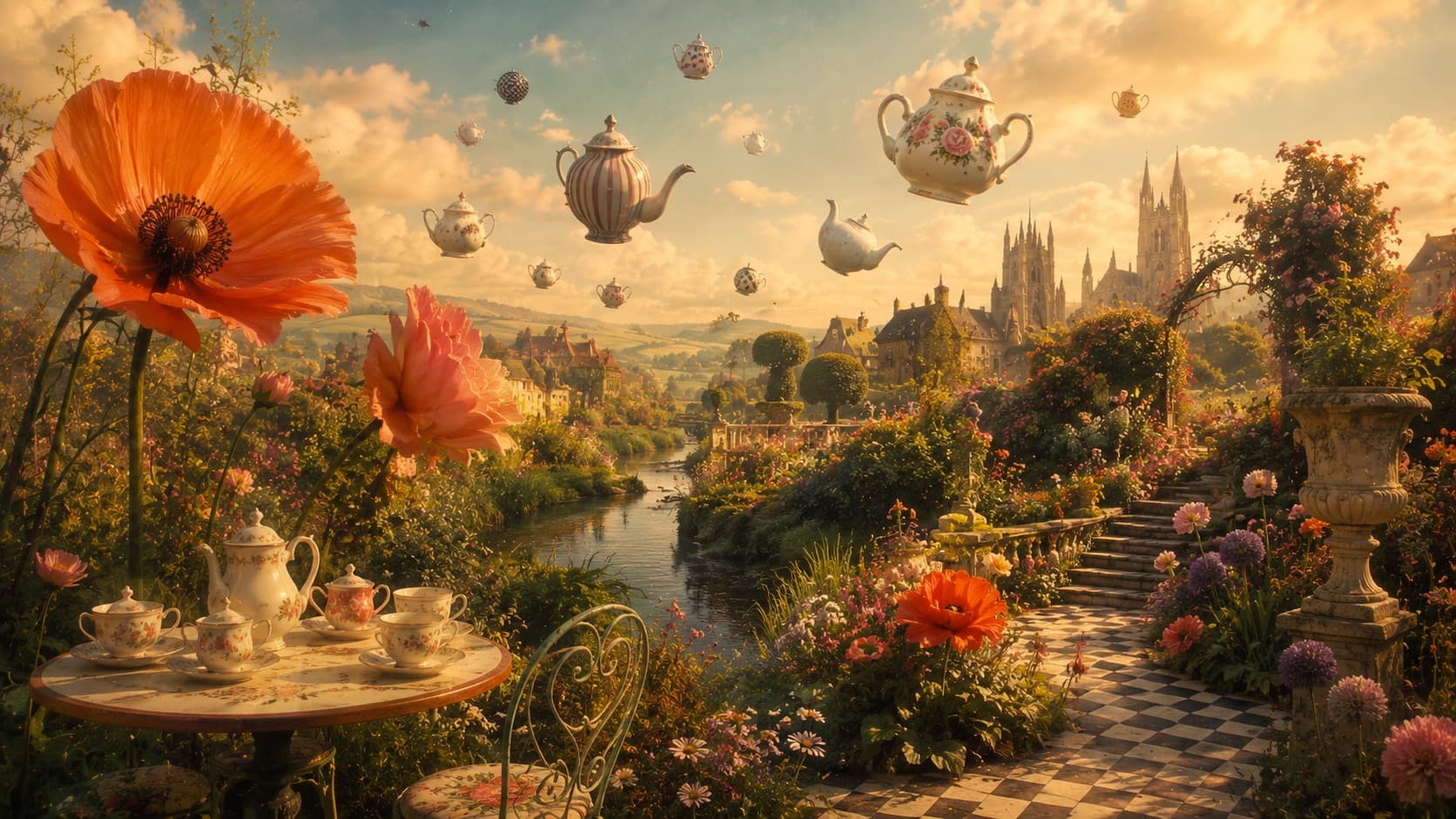
Gong’s music is gloriously unlike anyone else’s. Blending psychedelia, space-rock, jazz and progressive rock, it weaves Daevid Allen’s shimmering “glissando guitar” and surreal lyrics, Gilli Smyth’s ethereal “space whisper,” Didier Malherbe’s sax and flute and Tim Blake’s cosmic synthesizers into long, trance-like grooves and quirky, whimsical songs. At its heart lies the “Radio Gnome Invisible” mythology — a cast of pothead pixies, flying teapots and Zero the Hero on the distant Planet Gong. Beneath the playfulness, though, lay formidable musicianship, which would later carry the band toward dazzling jazz-fusion.
If this is your scene, the books go deeper →
Eight albums, from teapots to fusion
The eight albums gathered here trace Gong’s remarkable journey. The psychedelic “Magick Brother” (1970) and “Camembert Electrique” (1971) gave way to their best-loved work, the “Radio Gnome Invisible” trilogy — “Flying Teapot” (1973), “Angel’s Egg” (1973) and “You” (1974) — a dazzling fusion of whimsy and cosmic space-rock. After Daevid Allen left, the band reinvented itself: the transitional “Shamal” (1976), produced by Pink Floyd’s Nick Mason, gave way to the gleaming jazz-fusion of “Gazeuse!” (1976) and “Expresso II” (1978), now led by drummer Pierre Moerlen.
Album by album
Eight albums of psychedelic whimsy and cosmic invention. Tap any title for its guide.
The players
Gong have always been less a band than a travelling family, founded by guitarist and poet Daevid Allen and space-whisperer Gilli Smyth. Their classic 1970s line-up brought together guitarist Steve Hillage, saxophonist and flautist Didier Malherbe, synthesist Tim Blake, bassist Mike Howlett and the virtuosic drummer Pierre Moerlen, who would later steer the band toward jazz-fusion. Countless others have passed through over the decades, and after Daevid Allen’s death the group carried on under guitarist Kavus Torabi. The band’s story carries real loss: Pierre Moerlen died in 2005, Daevid Allen in 2015, and Gilli Smyth in 2016.
Where to start
Begin with “Angel’s Egg” (1973), for many the jewel of the Radio Gnome trilogy and the perfect entry into Planet Gong — whimsical, cosmic and endlessly inventive. From there, “You” (1974) takes the space-rock to its furthest, most transcendent reaches, while the earlier “Camembert Electrique” (1971) captures their raw psychedelic charm. Three albums that reveal one of progressive music’s most magical bands.
Why they still matter
Gong matter as one of the most imaginative and joyful bands in the whole history of progressive music — a group who built an entire mythical universe and scored it with music of genuine brilliance, fusing psychedelia, space-rock and jazz into something wholly their own. Through Daevid Allen’s boundless invention, Gilli Smyth’s ethereal presence and a host of gifted players, they created a body of work that still enchants and inspires. For anyone drawn to progressive music at its most surreal, playful and free, Gong are essential listening.