
AlbumBritish
Hergest Ridge
- BandMike Oldfield
- Released1974
- StyleInstrumental prog
- Line-upMike Oldfield
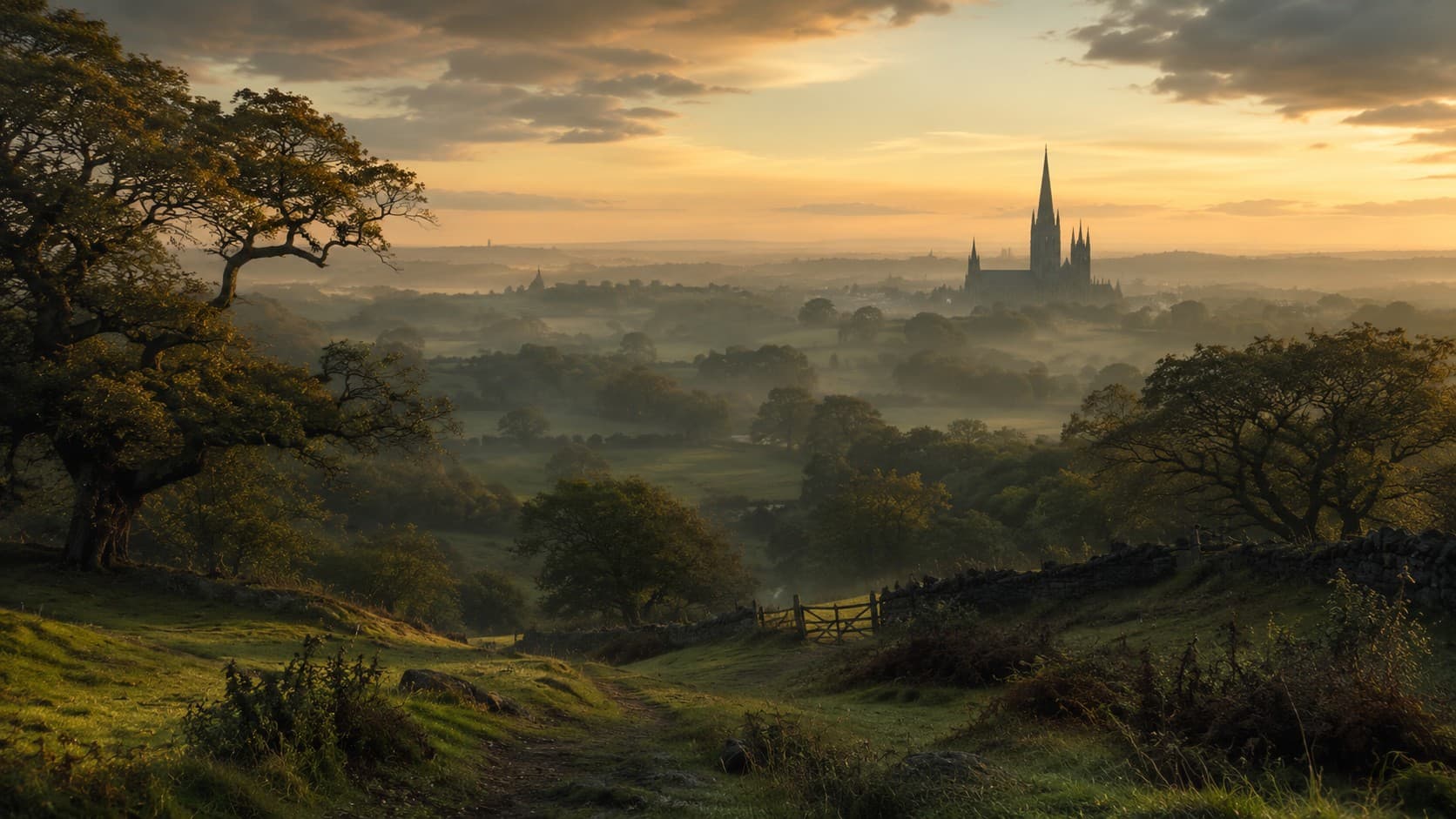
Hergest Ridge holds a strange distinction in British chart history: it is one of the very few albums ever knocked off the number one spot by the artist’s own earlier record. Released in 1974 as the follow-up to the world-conquering Tubular Bells, it climbed to number one — and then, three weeks later, was pushed aside by Tubular Bells itself, its sales suddenly revived by all the fuss. Gentler and greener than its predecessor, it was written in self-imposed exile on the English hillside that gives it its name.
The short version
Hergest Ridge (1974) is Mike Oldfield’s second album, and in shape it closely follows his first: a single instrumental composition spread across two sidelong parts, layered up from many overdubbed instruments into one continuous, shifting whole. Overwhelmed by the sudden fame of Tubular Bells, Oldfield had fled London for a house near Kington, on the border between England and Wales, in the shadow of the hill he named the record after. He recorded it in the spring of 1974 at The Manor in Oxfordshire, with Tom Newman, who had co-produced his debut. It reached number one in Britain, then handed the top spot straight back to Tubular Bells.
A retreat to the hills
The whole album grew out of Oldfield’s need to get away. Tubular Bells had made him famous almost overnight, and he found the spotlight deeply uncomfortable; rather than tour or court the press, he went looking for somewhere quiet and, in early 1974, settled on a house near Kington in Herefordshire, at the foot of Hergest Ridge. There he wrote the follow-up in seclusion, passing the time between ideas by playing simple old melodies with local musicians and flying model aeroplanes up on the ridge. When the demos were ready he took them to The Manor, Virgin’s country studio, and rebuilt them layer by layer with Tom Newman. Even here the peace kept breaking: Hollywood came calling for the Tubular Bells theme, chosen for The Exorcist, and with it came fresh pressure to become a star he had no wish to be.
The sound
Where Tubular Bells could feel restless and even eerie, Hergest Ridge is pastoral and warm, closer in spirit to the English classical tradition of composers like Vaughan Williams than to rock. It opens on a sustained wash of pipes and drifts through gentle, folk-tinged themes, Oldfield stacking electric and acoustic guitars, organ, strings and wordless voices into dense, glowing textures. The record is not all calm, though. Deep in the second part comes the passage his listeners simply call the thunderstorm: a long, churning wall of overdriven guitars that builds and builds before the music finally clears and returns to serenity — acoustic guitar, strings and choir bringing it gently home.
Reading up on British prog? The books go deeper →
The songs
There are, strictly speaking, no songs at all — just Part One and Part Two, each filling a side of the original LP. Part One, a little over twenty minutes, lays out the album’s main themes: the opening pipes, a strong and hopeful central melody, and long passages of unhurried, pastoral beauty that reward close listening. Part Two, slightly shorter, is the more active and dramatic of the pair, reprising and reworking those themes before erupting into the famous thunderstorm and then subsiding into a hushed, bittersweet close. It is one continuous piece of music in two movements, meant to be heard whole.
Reception and legacy
Commercially, Hergest Ridge was another triumph: straight to number one, where it stayed for three weeks until Tubular Bells, its sales reignited by the new album, climbed back above it — a rare case of an artist overtaking himself. Critically it had a harder time. Some reviewers, expecting a repeat of Tubular Bells, found it slow or self-similar, and the comparisons irritated Oldfield, who felt it was the more carefully composed of the two. Opinion has softened greatly since: many now regard it as one of his most beautiful works, and a fair number of his admirers rate it above his debut. In 1976 the composer David Bedford, who conducted its strings, arranged a fully orchestral version, part of which was later used in the documentary film The Space Movie.
The verdict
Hergest Ridge is the quiet middle child of Oldfield’s great early trilogy, overshadowed on one side by the phenomenon of Tubular Bells and on the other by the richer Ommadawn that followed. That is a little unfair. Taken on its own terms — as a single, unhurried, deeply English piece of pastoral music — it is lovely, and its thunderstorm is one of the most thrilling things he ever recorded. It is not where you should start with Mike Oldfield; Tubular Bells and Ommadawn have first claim on that. But for anyone who has fallen for his world of layered, wordless soundscapes, the view from Hergest Ridge is well worth the climb.