
AlbumBritish
Pawn Hearts
- BandVan der Graaf Generator
- Released1971
- StyleDark prog
- Line-upPeter Hammill, Hugh Banton, David Jackson, Guy Evans
The twenty-three-minute piece that fills side two was never played through in the studio. It was built in fragments and edited together at the mix, and when Belgian television asked for it, the band filmed the sections separately and let the editing suite do the rest. They did not perform it live, in one go, in front of an audience until 2013 — forty-two years later. Pawn Hearts is the densest and darkest record by prog’s masters of dense and dark, it flopped in Britain, and it went to number one in Italy.
The short version
Pawn Hearts is Van der Graaf Generator’s fourth studio album, released in October 1971 on Charisma. It was cut at Trident Studios in London over the summer of 1971, produced by John Anthony, with engineering from David Hentschel, Robin Geoffrey Cable and Ken Scott — the last of whom had worked on the Beatles’ white album and had just done Hunky Dory. The line-up is Peter Hammill on voice, piano and guitar; David Jackson on saxophones and flute; Hugh Banton on organs, Mellotron, ARP and bass pedals; Guy Evans on drums. Robert Fripp guests on guitar. Three tracks, forty-five minutes. Paul Whitehead, who painted the early Genesis sleeves, did the cover.
Number one in Italy
It was meant to be a double. The second record would have held solo pieces by Banton, Jackson and Evans plus live-in-the-studio versions of older songs, and Charisma vetoed the lot — accounts differ as to whether the objection was financial or editorial. The master tape of those sessions is lost; a few of the orphaned pieces turned up for the 2005 reissues. What Charisma released instead sank without trace at home and then did something nobody expected. In Italy, where progressive rock was becoming a mass audience, Pawn Hearts went to number one and stayed there for around three months. The band toured expecting half-empty halls and found the opposite. Jackson said the record was seen there as the ultimate album by the ultimate band, and found he could not always walk down an Italian street unrecognised. They were offered another Italian tour immediately, at up to three shows a day. Genesis, whose Nursery Cryme had not charted at home either, met the same welcome. After several exhausting Italian tours the band split in the summer of 1972.
The sound
This is the album where they stopped recording songs and started using the studio as an instrument. Banton had modified his Hammond and Farfisa organs himself and the results are unlike any other keyboard sound of the period; the Mellotron makes one of its rare VdGG appearances; Jackson plays two saxophones at once, building wind sections that behave like an orchestra having an argument. Fripp is here throughout and never dominates — a supporting texture rather than a guest solo spot, which tells you something about how much room this band left. Hammill goes from a whisper to a shriek and back inside a bar. The method is contrast: the beautiful passages exist to make the brutal ones worse, and it works every time. It is hard listening, deliberately, and the great moments are spaced far apart on purpose.
Reading up on British prog? The books go deeper →
The songs
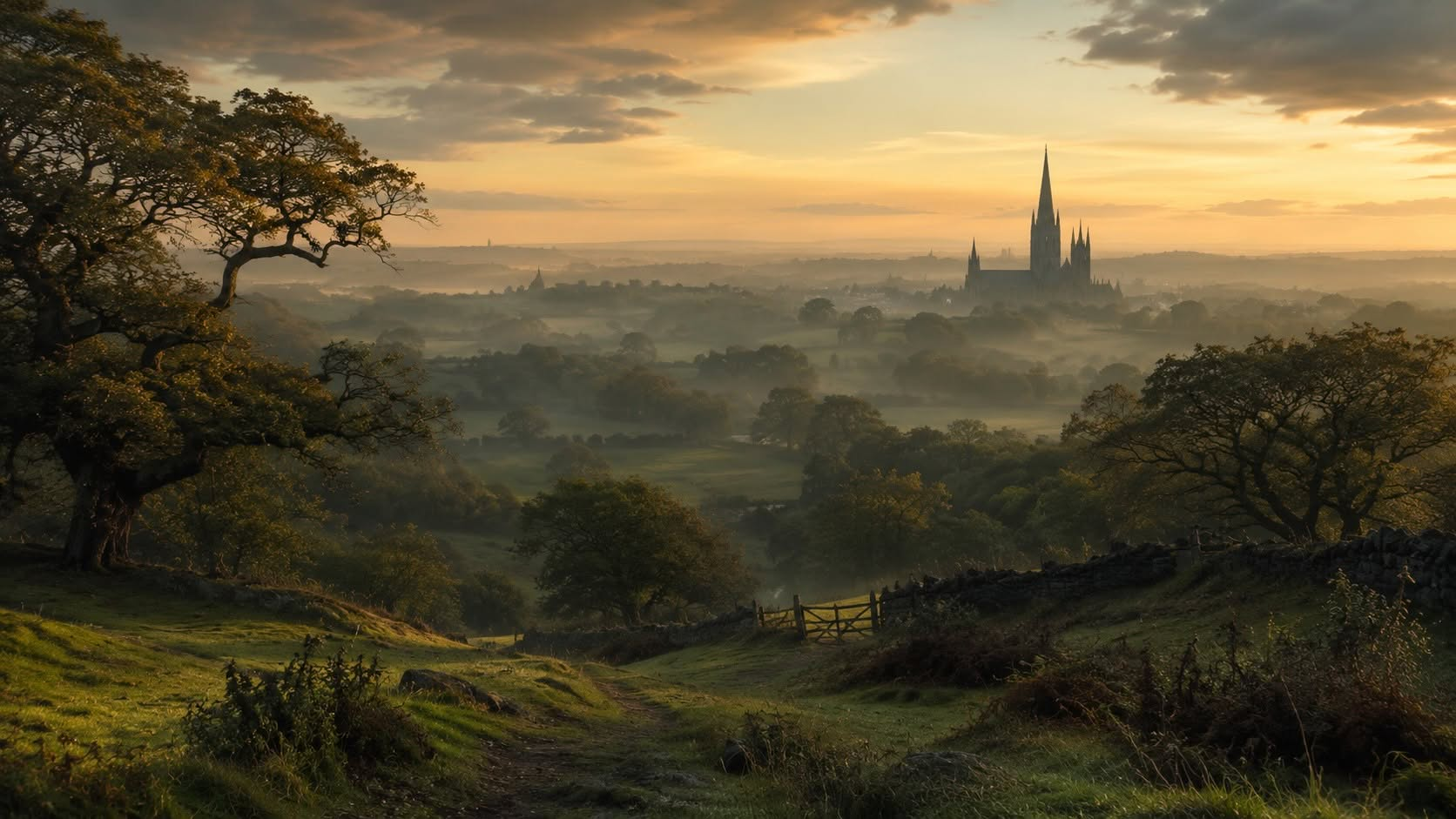
Lemmings (Including Cog) opens melodic and turns into a wall of sound, weighing up whether to follow the crowd or stand against it, with Banton’s organ closing it out. Man-Erg is the one people love: three minutes of piano and restrained singing, then a dissonant middle section detonates, Jackson’s discordant saxophone riff drags the band into fury, and the second half wanders through soprano sax and flute into an enormous climax before the staccato riff returns and overruns everything. It is about the different people who live inside one man, the gentle and the violent, and it is as good as ten-minute progressive rock gets. Then A Plague of Lighthouse Keepers: ten sections across twenty-three minutes, a lighthouse keeper alone on his rock watching a storm take a ship apart and coming undone as he watches. Fripp ends it. Whitehead’s sleeve is the landscape it happens in.
Reception and legacy
The North American pressing had a fourth track: the band’s arrangement of Theme One, a BBC Radio 1 sign-off written by George Martin, dropped in between Lemmings and Man-Erg. In Europe it was a single instead, and John Peel took to closing his programmes with the Van der Graaf version rather than Martin’s. Beyond that curiosity, the record’s history is simple: ignored at the time in Britain, adored in Italy, and now routinely named as one of the masterpieces of the genre by people who also concede it is hard work. Van der Graaf remain the greatest progressive band most listeners have never heard. This is the album their reputation rests on.
The verdict
A masterpiece, and not a starting point — go to Godbluff first, which does the same things with the doors slightly open. Come here when you are ready, and then give it Man-Erg with nothing else happening in the room. If that lands, take the whole of side two in one sitting, because A Plague of Lighthouse Keepers cannot be sampled and will not survive being background music. It is a difficult, unfriendly, magnificent record that a country of sixty million people put at number one while its own country looked away, and fifty years later Italy still looks like the one that got it right.